Side A: Alexander Albert Drabik was born here, in a log cabin, on December 28, 1910 to John Drabik and Frances Lewandowski, Polish immigrants from Szymborze, Germany, now Poland. Alex, youngest son of 14 children, attended Door Street School. A meat cutter, he enlisted in the United States Army in October 1942. Drabik fought in the Ardennes, Central Europe and Rhineland Campaigns of World War II. He received a Purple Heart during the Battle of the Bulge. On March 7, 1945, Sergeant Drabik led 10 Company A soldiers of the 27th Armored Infantry Battalion of the 9th Armored Division across the Ludendorff railroad bridge from Remagen, Germany to the Rhine River east bank. (Continued on other side)
Side B: (Continued from other side) Although it had been prepared for demolition, they ran through enemy fire, cleared bridge towers of snipers and demolition crews, and eradicated snipers and gun crews along the bank and cliffs. They secured the first bridgehead across the Rhine, shortening the war and saving tens of thousands of lives. Drabik was awarded the Distinguished Service Cross on March 27, 1945 for “extraordinary heroism in action against the enemy” and “unflinching valor.” Alex, a butcher and cement plant repairman, and his wife Margaret Feeney raised a daughter Rita. Alexander Drabik, man of peace, risked his life to preserve American freedom.
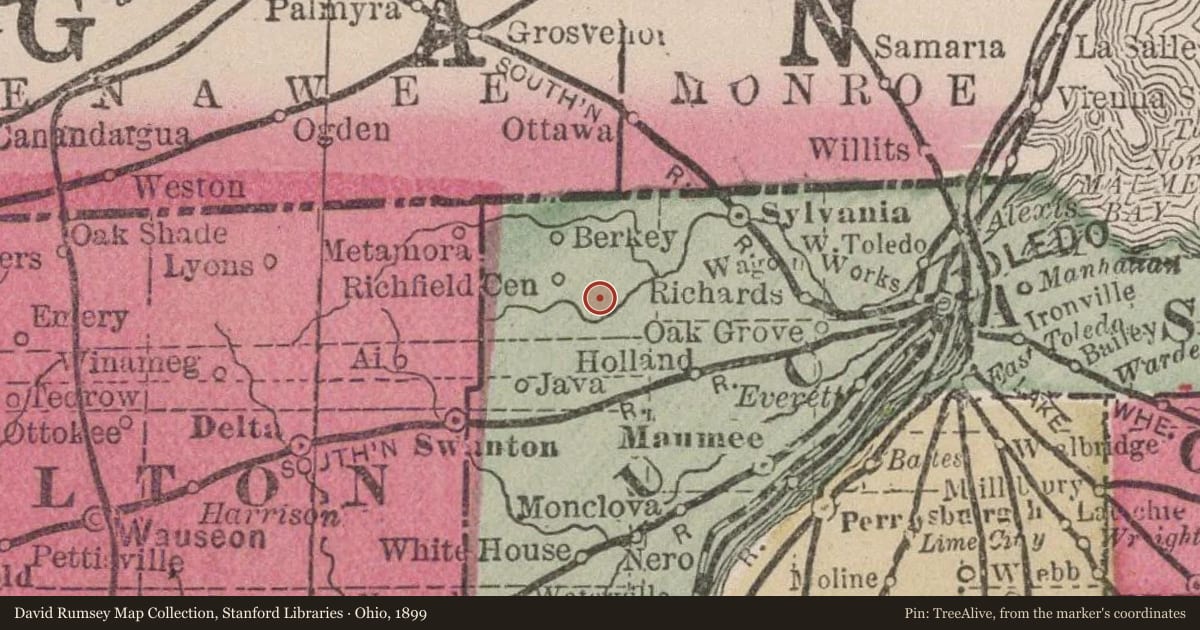
Slide toward Today to fade the historical sheet and see the modern map underneath.
For example, one family's tree showed the Articles of Confederation marker in Pennsylvania standing under a mile from where William Gabby lived in the 1760s.
What that marker records spans 1777 to 1789, overlapping William Gabby's years there.