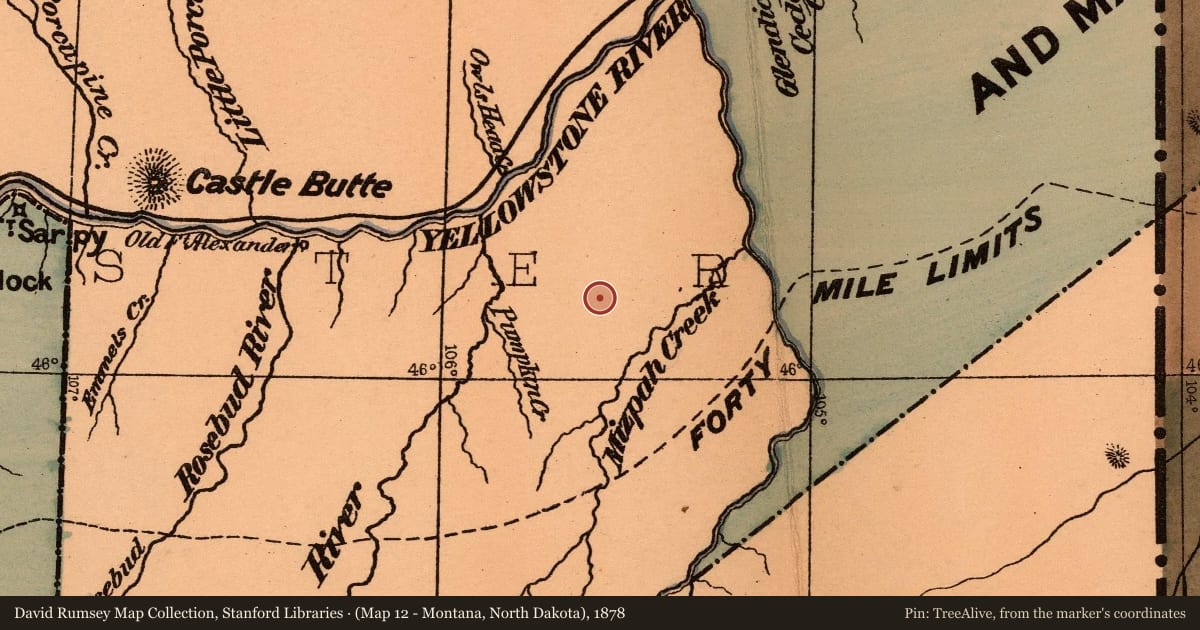
A small community, called Beebe, once existed in this remote, sparsely settled country. It owed its existence to A. J. Maxwell, owner of the Deadwood Stage Line. Maxwell established a stage station here where the Simonson-Patterson Cattle Company had a cow camp. Stations afforded a quick change of horses and brief respite for passengers. The stage road, completed in April 1880, connected Fort Keogh near Miles City and the mining camp of Deadwood, S. D. It crossed some of the loneliest country on the northern Great Plains. After the hard winter of 1886-87, cattlemen left the country. Al Berry founded the town in 1890 adjacent to his homestead and named it for Elizabeth Beebe, the settlement’s postmistress. Beebe included a roadhouse, dance hall, barn, barber shop, store, and “five long, low ranch buildings scattered along [Pumpkin] Creek, each with at least four inches of dirt on the roofs.” Beebe was the only gathering place for miles and even hosted an annual fair for a time in the early twentieth century. By the 1930s, tough economic times and drought forced many local residents from their homes. The post office closed in 1935 and, by 1940, all the residents and buildings were gone except for one barn. By the twenty-first century, nature had largely reclaimed Beebe, leaving it all but forgotten except in the memories of a few old-timers.
Slide toward Today to fade the historical sheet and see the modern map underneath.
For example, one family's tree showed the Articles of Confederation marker in Pennsylvania standing under a mile from where William Gabby lived in the 1760s.
What that marker records spans 1777 to 1789, overlapping William Gabby's years there.