Cof Cymru: National Historic Assets of Wales · Wales
Pen-Rhos Engine House
Brymbo, Wrexham, Wales
A Grade II* listed building in Pen-Rhos, Brymbo, Wrexham, designated on 1 December 1995.
The record
- Designation
- Listed building, Grade II*
- Broad class
- Industrial
- Date of designation
- 1 December 1995
- Locality
- Pen-Rhos
- Community
- Brymbo
- Unitary authority
- Wrexham
- Country
- Wales
- Coordinates
- 53.07146, -3.06758
- Cadw reference
- 14889
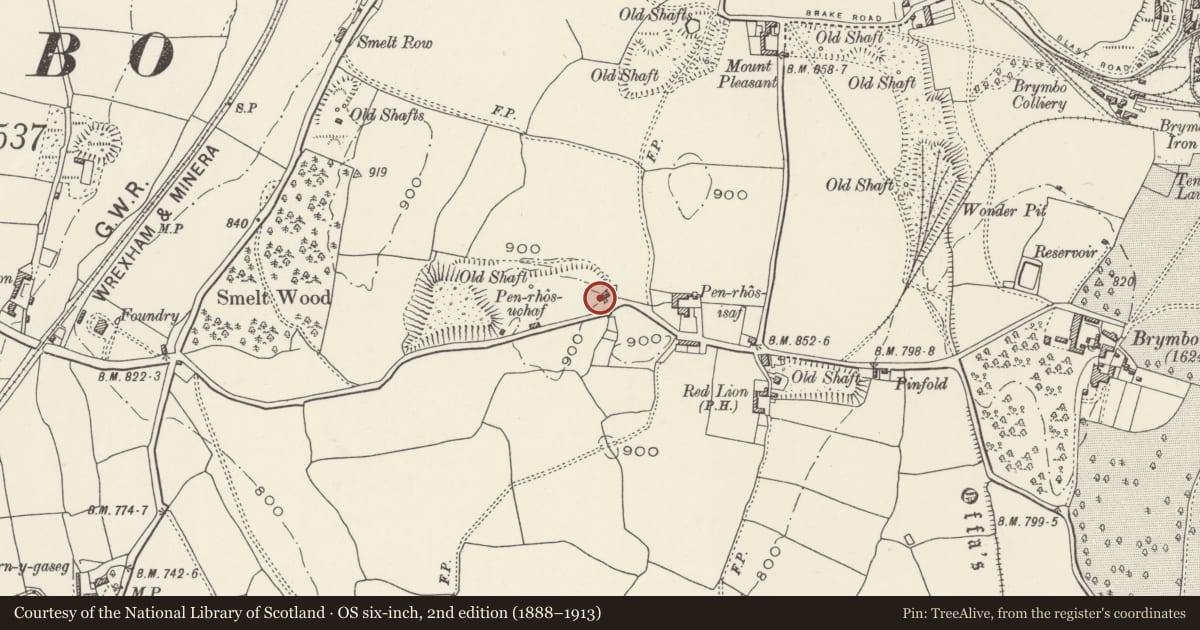
Slide toward Today to fade the historical sheet and see the modern map underneath.
David Rumsey Map Collection, Stanford LibrariesDavid Rumsey Map Collection, Stanford LibrariesDavid Rumsey Map Collection, Stanford LibrariesLlyfrgell Genedlaethol Cymru – The National Library of WalesDavid Rumsey Map Collection, Stanford Libraries
5 historical maps cover this location, the earliest the 1608 map "(13) Cambriae Typus." (David Rumsey Map Collection, Stanford Libraries).
Historical maps covering this location
- 1608 · (13) Cambriae Typus. (David Rumsey Map Collection, Stanford Libraries)
- 1795 · To Sir Watkin Williams-Wynn Bart ... the map of the six counties of North Wales is most… (Llyfrgell Genedlaethol Cymru – The National Library of Wales)
- 1883 · Watershed map England, Wales 3. (David Rumsey Map Collection, Stanford Libraries)
- 1898 · 121 Wrexham (Hills) (David Rumsey Map Collection, Stanford Libraries)
- 1901 · Sheet 9 and 10. (David Rumsey Map Collection, Stanford Libraries)
Cadw's description
Location
On the N side of the road running on the W side of the former Steel Works site, W of Pen-Rhos Farm.
History
Late C18, almost certainly built for John Wilkinson, one of the leading iron-masters and technological innovators of the industrial revolution. It was probably built to house a Hornblower double cylinder engine, pumping for a coal mine. Jonathon Hornblower was an independent engine designer and builder of the period, who was developing the Newcomen engine into a modern form in competition with Boulton and Watt. The engine house was converted into a dwelling c1820, but later abandoned.
Exterior
Tall beam engine house. Battered walls of rough rubble with dressed stone quoins and dressings; roofless, but with moulded kneelers to gable copings, and brick stacks on the two gable ends, added when the building was converted into a dwelling. Beam arch high in bob-wall to S gable, partially blocked to convert to domestic window; semi-circular with dressed stone voussoirs. Small doorway to lower right in this gable. Remains of what may have been a square stack to the E.
Reason for designation
Listed as an exceptionally rare survival of a C18 beam engine house, dating from a period when the design of the steam engine was rapidly evolving.
Scheduled Ancient Monument De 203.
Nearby in the register
- Penrhos Engine HouseEngine Houseunder 1 mi
- Offa's Dyke: Section South of Brymbo CollieryLinear Earthworkunder 1 mi
- The Bottle ChimneyIndustrialunder 1 mi
- Brymbo Lead Smelting WorksIndustrial buildingunder 1 mi
Other entries of the same register within about three miles of this one, by straight line.